Mini Split Deep Cleaning Service Brooklyn
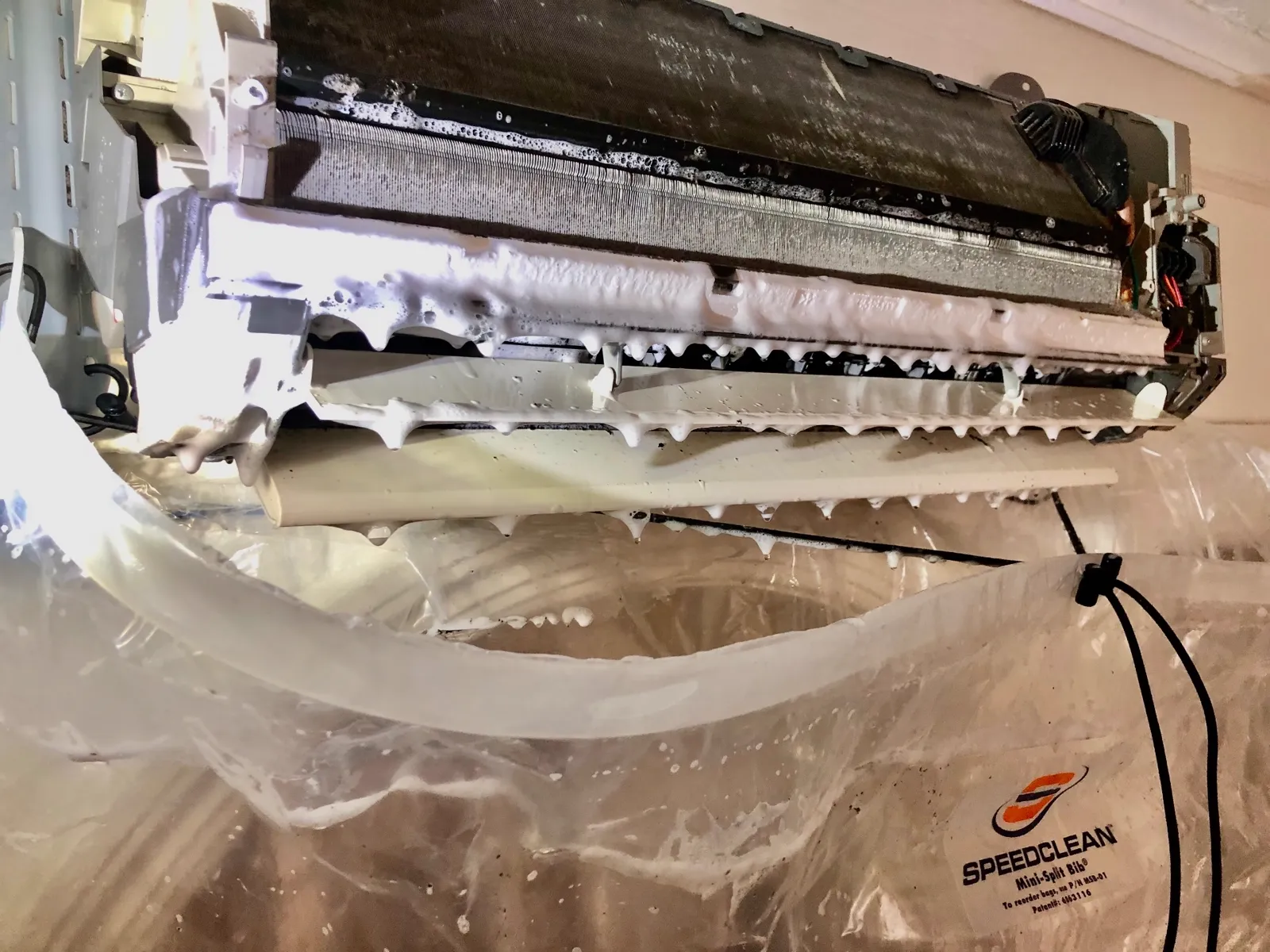
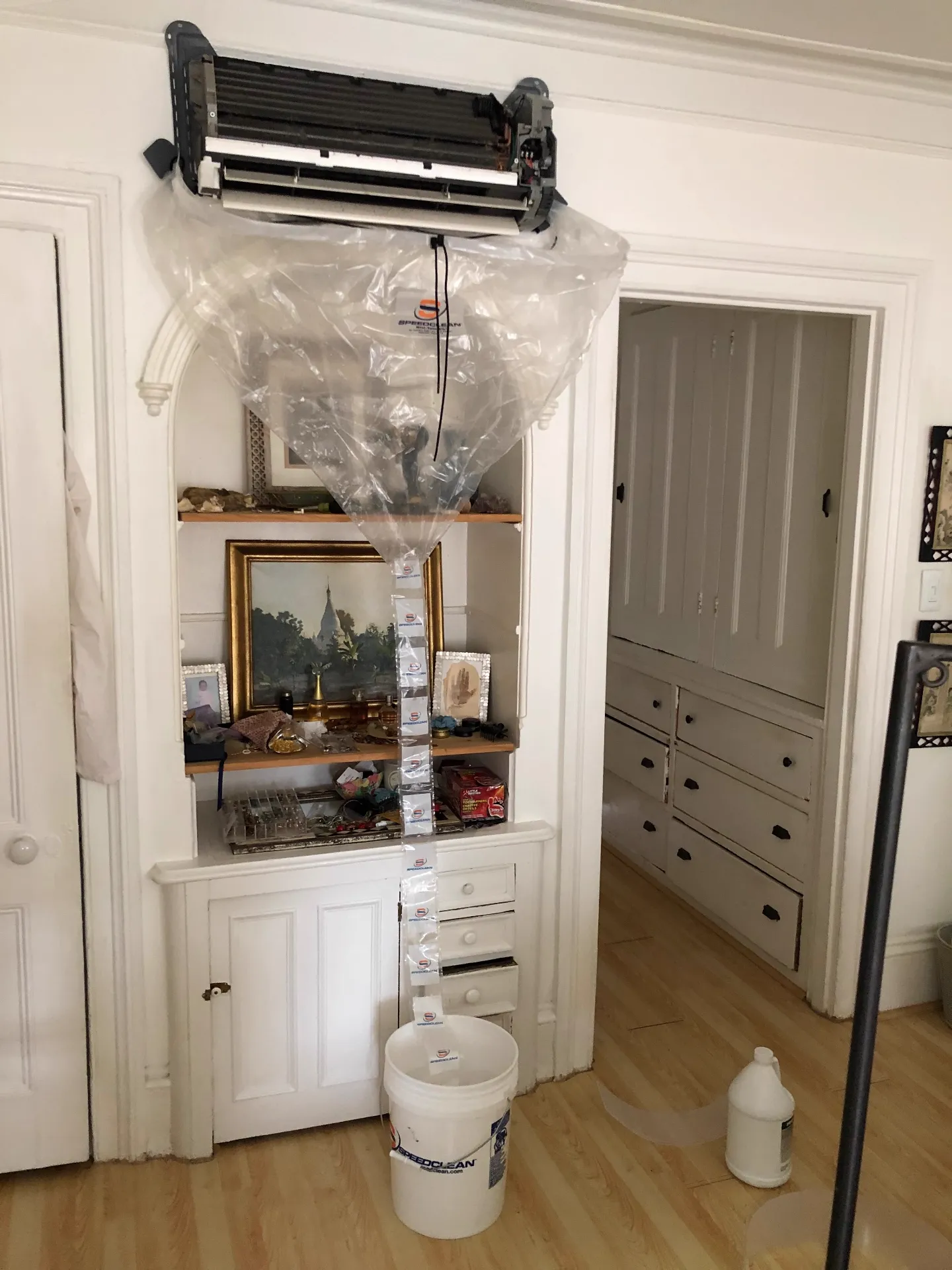
A full ductless mini split cleaning service for wall-mounted units across Brooklyn. The unit stays on the wall — we pop off the cover and filters, bag it with a contained bib, and flush years of dust, mold, and grime out of the coil and blower wheel.
(347) 997-3360Why ductless mini splits need deep cleaning
Wall-mounted mini-splits pull air across the coil and blower wheel constantly, and over a few years that builds up a layer of dust, mold, and bacteria you can't reach with a filter rinse. A surface wipe doesn't touch it.
A deep clean is done with the unit still mounted on the wall — we never take it down. We pop off the front cover and filters, bag the unit with a contained bib, and flush the coil and blower wheel in place so the buildup actually comes out. That restores airflow, cuts down on musty smells, and helps the unit cool properly again.
What our mini split cleaning service includes
Every job, every unit — start to finish, no shortcuts.
- Front cover and filters removed and washed
- Coil and blower wheel cleaned in place with a contained bib system
- Buildup, dust, mold, and grime flushed out
- Sanitizing treatment
- Cover and filters reinstalled, unit tested
Why your mini split smells musty or like dirty socks
That sour, gym-bag smell that hits the room for the first few minutes after the unit starts has a name in the trade — dirty sock syndrome — and it is not coming from the filter. It is coming from the aluminum coil and the plastic blower wheel behind it.
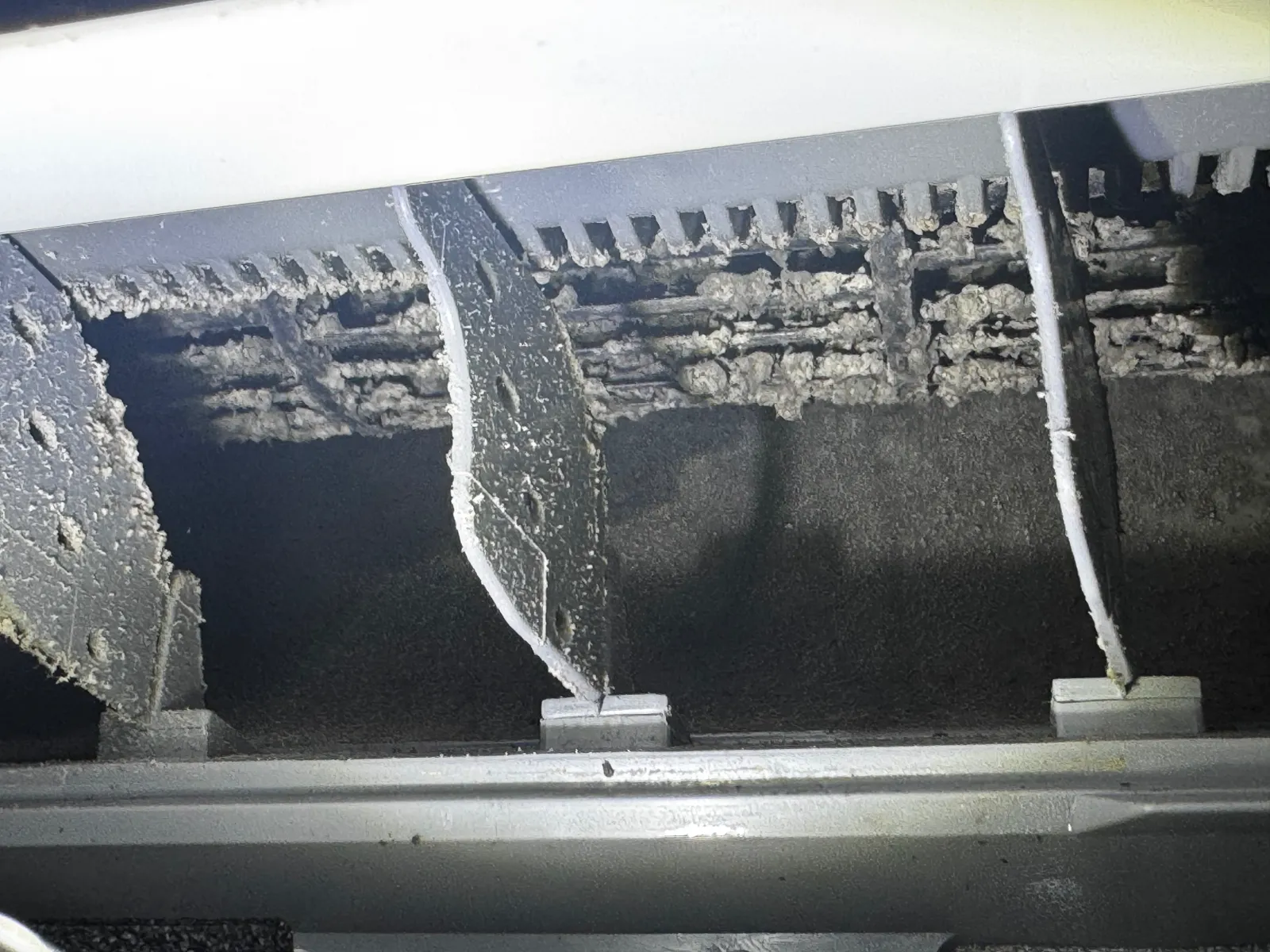
In cooling mode the coil runs cold enough to pull moisture out of the air. That water sheets down the fins and drains away, but the surface stays damp long after the unit shuts off. Add the layer of fine dust that every mini split pulls in through the top intake, and you have exactly what mold and bacteria need: moisture, food, darkness, and no airflow. Over a season or two a biological film builds across the fins and inside the curved slots of the blower wheel.
The smell is strongest at startup because the first push of air lifts everything off that film at once. A few minutes later your nose adapts and the smell seems to fade, which is why so many people live with it for years. In Brooklyn we see it worst in apartments where the unit runs hard in cooling and gets switched straight off at the remote, so the coil never dries.
Nothing you spray at the front of the unit reaches it. The film is on the back face of the coil and inside the blower wheel housing, and it is removed by physically flushing those parts — which is what a deep clean does.
What actually comes out of a dirty mini split
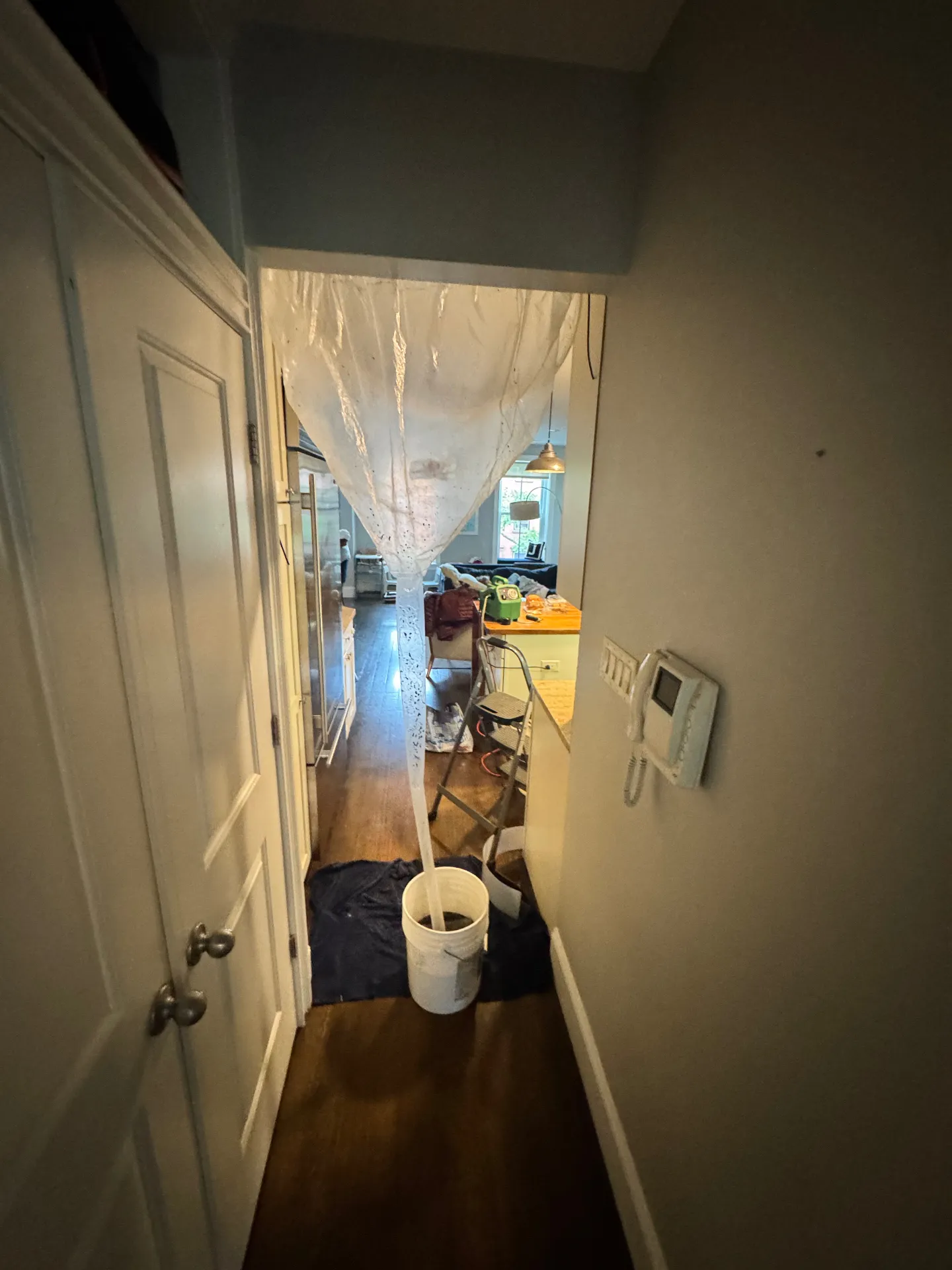
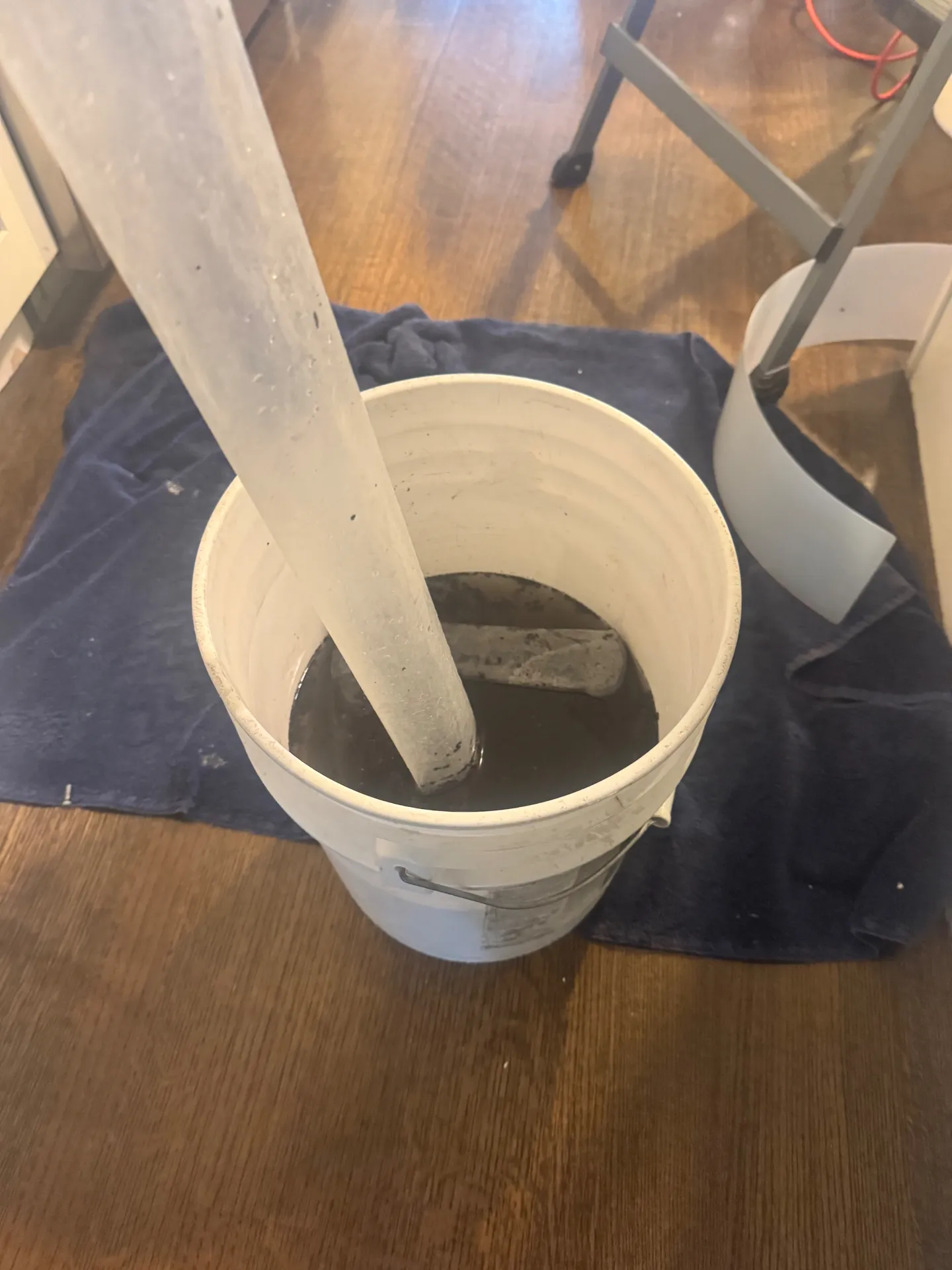
The bucket photo further up this page is not a staged shot. That is the runoff from one wall-mounted head in a Brooklyn apartment, and it is what customers find hardest to believe until they see their own.
What comes out is usually some mix of the following. Household dust and textile fibers, which make up the bulk of it — every mini split is a room-scale dust filter running for hours a day. Cooking grease from kitchens and open-plan apartments, which turns the dust into a sticky paste the filter cannot shed. Mold and bacterial growth from the damp coil. Pet dander and hair in homes with animals. And in units installed during a renovation, fine drywall and plaster dust that went in during the first season and has been compacting ever since.
On top-floor and street-facing units we also see soot and road grit, which is a Brooklyn-specific problem — windows open onto traffic and the intake sits high on the wall where that air collects.
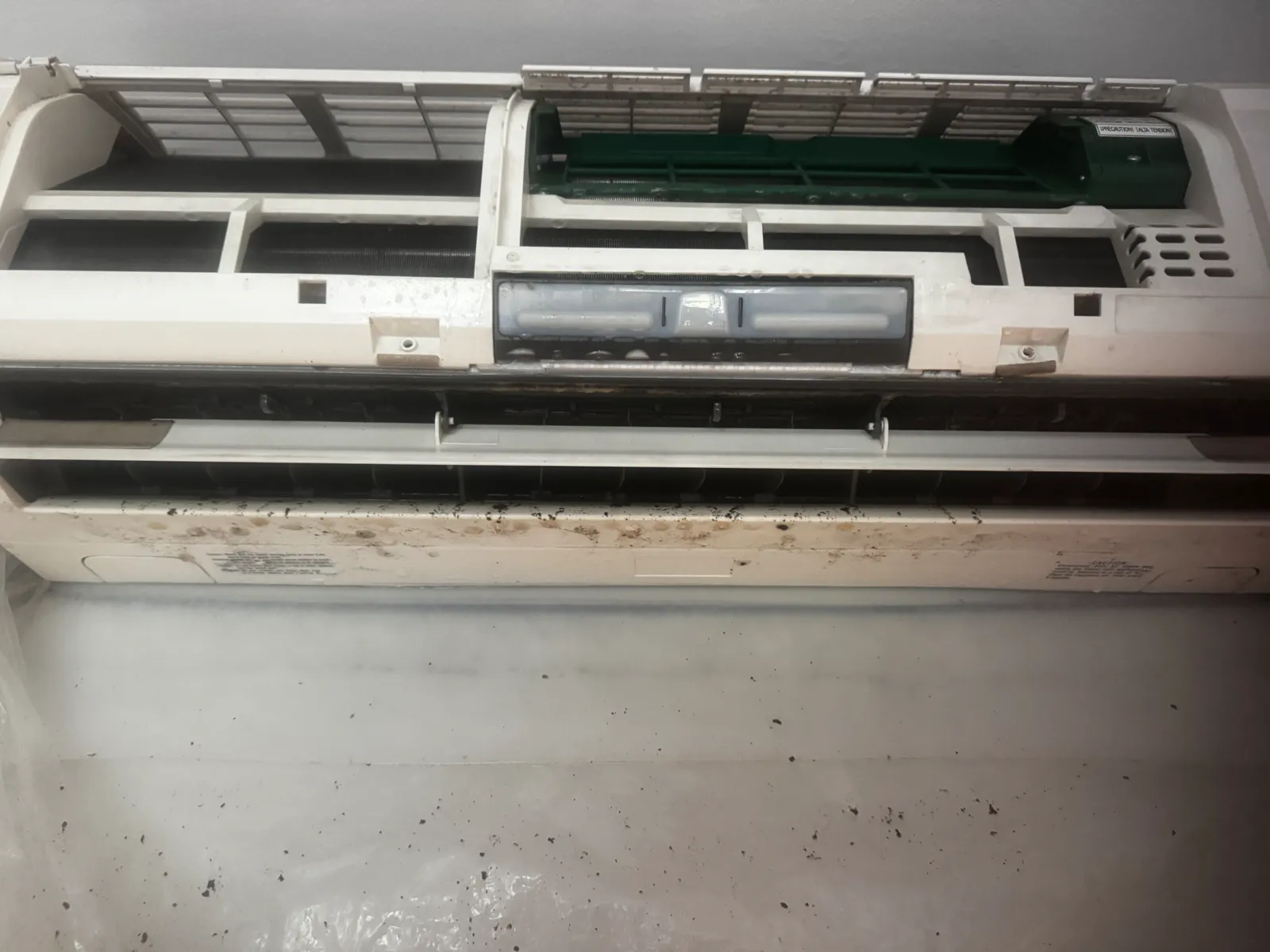
None of this is visible from the front of the unit. The face of the grille can look almost new while the blower wheel behind it is black. That gap between how a unit looks and how it actually is inside is the single most common reason people put this service off too long.
Why filter cleaning and spray cans will not fix it
Rinsing your filters every month is genuinely worth doing and we encourage it. It keeps airflow up and slows down how fast the inside of the unit loads with dust. What it does not do is clean anything that is already past the filter — and by the time a unit smells or feels weak, the problem is well past the filter.
Aerosol coil cleaners sold for home use run into two problems. The first is reach: sprayed from the front, the product lands on the leading edge of the fins and never gets to the back face of the coil or into the blower wheel slots where the buildup actually sits. The second is drainage. There is no containment, so whatever does dissolve has nowhere to go but down into the condensate pan and the drain line — which is how a can of cleaner turns into a clogged drain and water running down the wall a few weeks later.
Wiping the visible fins with a cloth is worse than it sounds. Coil fins are thin aluminum and bend easily, and bent fins permanently restrict the airflow across that section of coil.
A real deep clean is defined by the containment, not the chemical. The unit gets bagged into a bib that seals against the wall and channels every drop into a bucket, so we can flush the coil and blower wheel properly, at volume, with the water going where it belongs instead of into your floor. That is the part a spray can cannot replicate at any price.
How we protect your wall and floor during the clean
The honest concern people have about this service is water. You are asking us to flush several gallons through a unit mounted on a finished wall, often above a sofa, a bed, or a refinished floor. Handling that properly is most of the job.
Before anything is opened, the floor below and in front of the unit is covered and the furniture underneath is moved out or draped. The front cover and filters come off and go somewhere they can be washed separately, not into your sink. Then the containment bib goes on — a waterproof sleeve that wraps the body of the unit, seals against the wall above and to the sides, and funnels everything down through a hose into a bucket on the floor.
Only once that seal is checked does any liquid go near the coil. The flush runs through the coil and the blower wheel and drains into the bucket, which gets emptied as it fills. When the wash is done, a sanitizing treatment goes on, the unit is dried, the bib comes off, and the cover and clean filters are reinstalled.
Last, we run the unit and watch it — airflow, drainage, and normal operation — before we pack up. The drop cloths come out with us. We are EPA-certified and insured, and the standard we hold ourselves to is that the room should look untouched apart from a unit that finally blows clean air.
Single-head vs. multi-zone systems
A single-head system is one indoor unit paired with one outdoor condenser — common in a studio, a converted top floor, or a single back bedroom that central air never reached. Cleaning is straightforward: one head, one visit, one per-unit price.
A multi-zone system runs several indoor heads off one outdoor unit, and that is what most Brooklyn brownstones and larger apartments have. Here the heads almost never wear at the same rate. The living-room head that runs every evening and the kitchen-adjacent head that catches cooking vapor will be far dirtier than the guest room head that runs a few weeks a year.
It still makes sense to do them together. The setup and protection work is the bulk of the labor, so cleaning three heads in one visit costs meaningfully less than three separate visits, and it gives you one baseline date to count from for the whole system. There is also a performance argument: the heads share one outdoor unit, and a restricted head drags on the whole system rather than just its own room.
We quote per unit either way, and we tell you before starting if one head is clean enough to skip this round. Mitsubishi, Fujitsu, Daikin, LG, Samsung and Gree heads are all cleaned the same way — the cover removal differs by brand, the process does not.
Ceiling cassettes and floor-mounted units
Not every ductless head hangs high on a wall. Ceiling cassettes sit flush in a dropped ceiling and blow out of vanes on all four sides — common in renovated lofts, offices and open-plan ground floors. Floor-mounted units sit low along a baseboard and are often chosen in rooms with tall windows or landmarked facades where nothing could be mounted high.
Both collect the same buildup on the coil and blower wheel, and both need the same physical flush. What changes is the containment. A cassette is cleaned from below, which means the protection has to catch water coming straight down and keep it off the ceiling tile and the room beneath. A floor unit is easier to reach but sits in the dustiest air in the room and usually loads up faster, and the pan sits low relative to the drain, so the condensate path gets checked carefully as part of the visit.
Both take longer than a standard wall head, so the quote reflects that. Tell us on the phone which style you have — and if you are not sure, a photo of the unit is enough for us to tell you and to price it before we arrive.
Our pricing above is for wall-mounted heads. Cassettes and floor units are quoted individually, always before any work starts.
Mini split cleaning questions we get
How long does a mini split deep cleaning take?
Plan on about 90 minutes to two hours for a single wall-mounted head. Most of that is setup and teardown — bagging the unit with the containment bib, protecting the wall and floor, then flushing the coil and blower wheel, rinsing, sanitizing, reassembling and testing. A second head in the same home usually adds around an hour, since the drop cloths and equipment are already in place.
Does the unit have to come off the wall?
No. The whole clean is done in place. We remove the front cover and the filters, fit a contained bib around the unit that channels water down into a bucket, and flush the coil and blower wheel while the head stays mounted and connected. Taking a head off the wall means breaking into the refrigerant line set, and there is no reason to do that for a cleaning.
My mini split has weak airflow. Will cleaning fix it?
Often, yes — but we confirm it rather than assume it. A blower wheel packed with dust moves noticeably less air, and clearing it frequently brings the airflow back the same day. Weak airflow can also come from other causes we would check for. Describe what the unit is doing when you call and we will tell you whether a cleaning or a repair visit is the right first step.
How often should a mini split be cleaned in a Brooklyn apartment?
Every one to two years for a unit that runs year-round, and every two to three years for a unit that only runs in one season. Brooklyn apartments tend toward the shorter interval. Older buildings carry more airborne dust, windows stay open onto busy streets, and units installed during a renovation often pulled in drywall dust in their first season that was never cleaned out.
Will a deep clean help with allergies or asthma in the room?
We are not making a medical claim, but the mechanics are simple: a dirty blower wheel holds dust and mold growth, and every time the unit starts it pushes that across the room. Customers who book because of a musty room consistently report the air smells and feels cleaner afterward. If someone in the home is sensitive, this is a service worth keeping on a schedule instead of waiting for a smell.
The smell came back a few months after a cleaning. Why?
A mini split that shuts off wet keeps growing mold on the coil. If the unit is run hard in cooling and switched straight off at the remote, moisture sits inside in the dark. Running the unit in fan-only mode for ten or fifteen minutes before shutting it off dries the coil and makes a big difference. If the smell returns quickly even with that, tell us — a blocked or sagging condensate drain holding standing water is a different problem and a repair fix, not a cleaning one.
Do brand-new mini splits need cleaning?
Not in the first year or two under normal conditions. The exception is a system installed during construction or a gut renovation. Those units frequently run while sanding and cutting is still happening and pull fine drywall dust deep into the blower wheel. If your heads went in during a renovation and have never been cleaned, they are usually far dirtier than their age suggests.
What is the difference between a deep cleaning and a maintenance visit?
A maintenance visit is an inspection and tune-up: filters rinsed, drain checked, electrical connections and operating performance verified. A deep cleaning is a physical wash of the coil and blower wheel with the unit bagged and flushed. Maintenance keeps a clean system healthy. A deep clean is what removes buildup that is already there. Units that have gone years without service need the deep clean first.
Do tenants need to be home for the cleaning?
Someone needs to let us in and the room needs to be accessible, but nobody has to stay in the room while we work. Landlords and managing agents routinely schedule this with a tenant present for access only. We work off drop cloths, contain the water, and leave the room the way we found it.
Will cleaning lower my electricity bill?
It can help, though we will not promise a number. A coil and blower restricted by buildup force the system to run longer to reach the same temperature, and the outdoor unit works harder alongside it. Clearing that restriction lets the system hit setpoint sooner and cycle off. In a multi-zone home where several heads are dirty, the difference in run time is usually the most noticeable.
See the difference
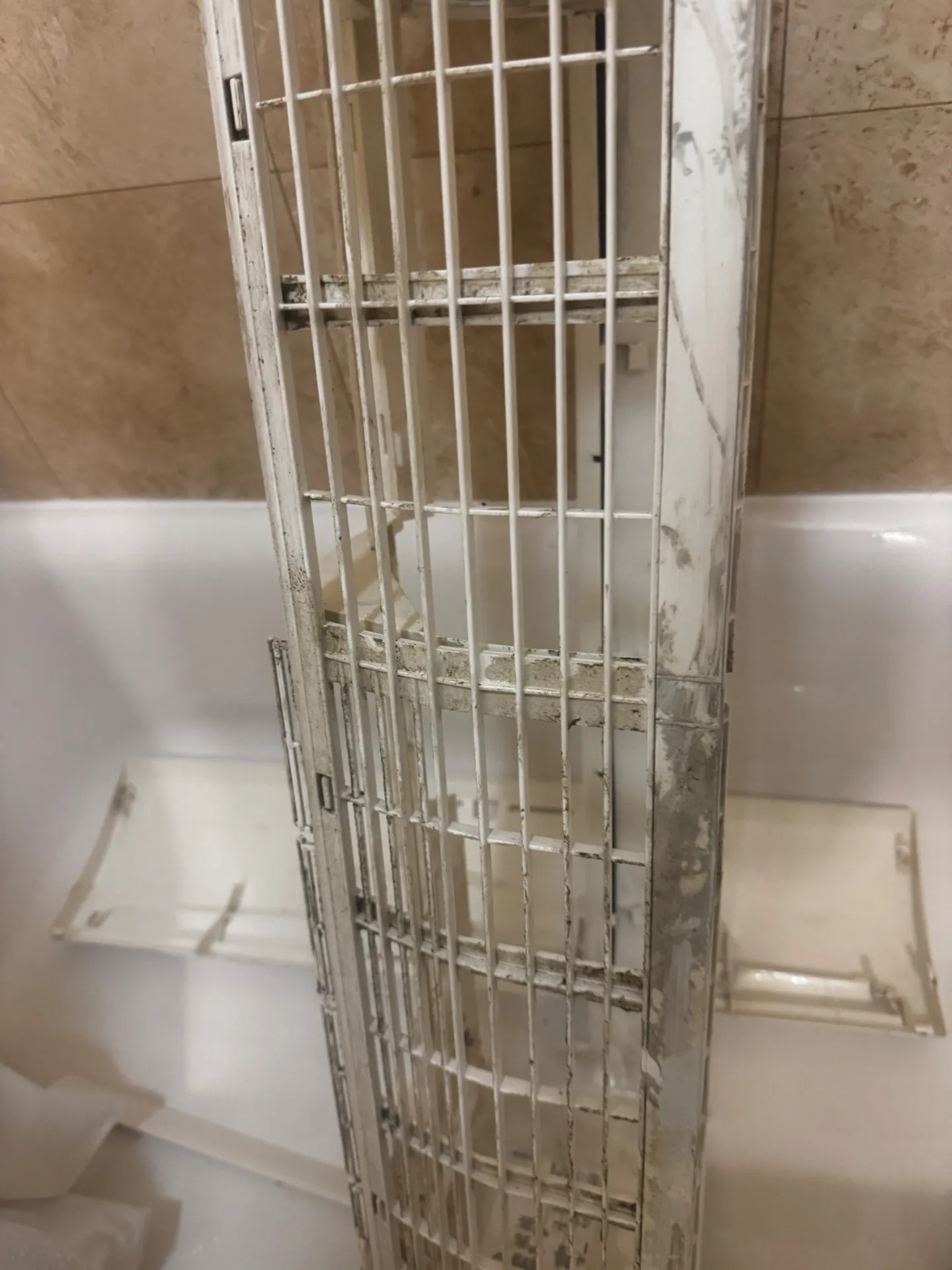
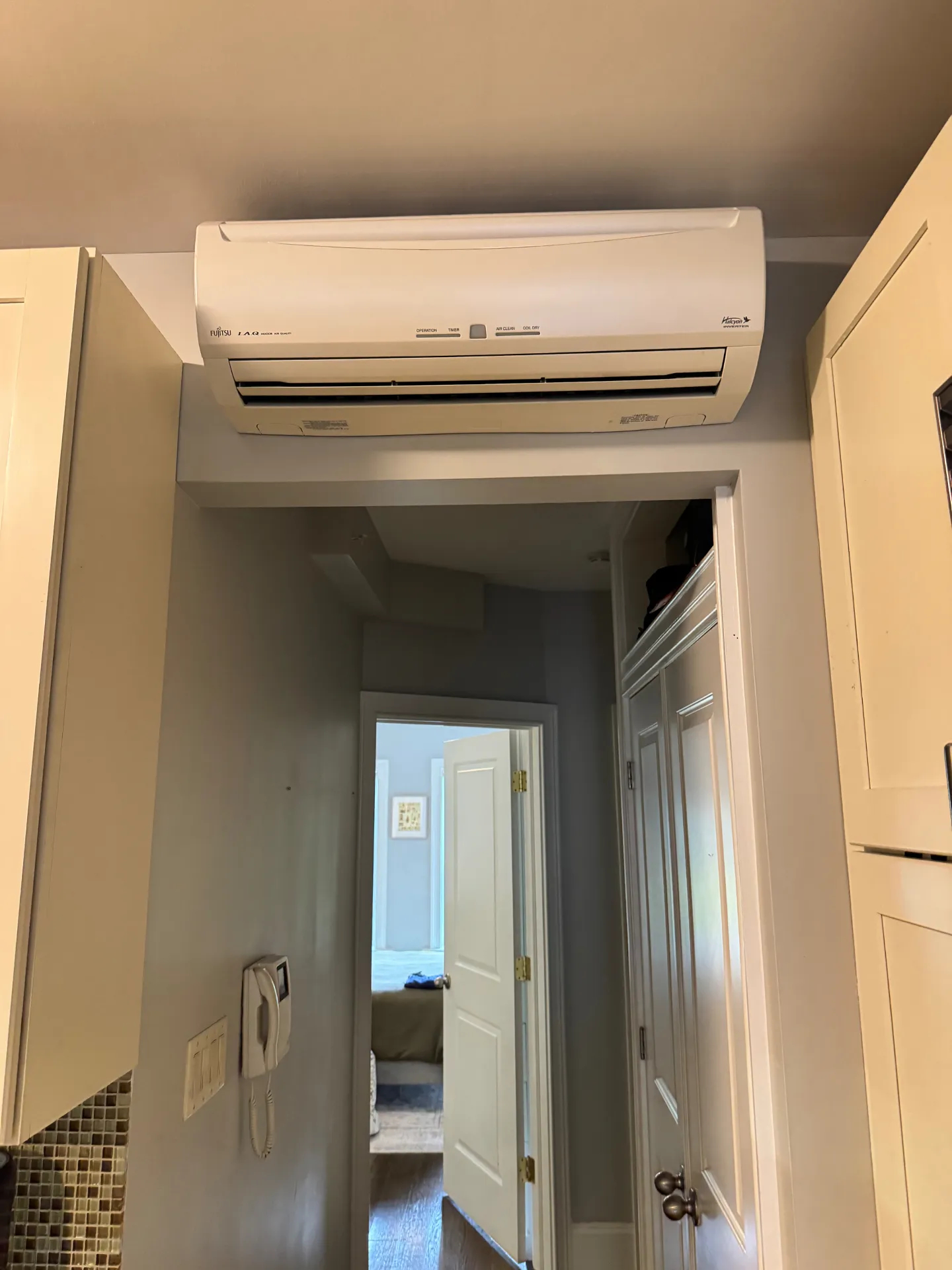
Before, after, and what comes out of a single wall-mounted unit.
The cleaning in action
Who needs a mini split deep clean?
If your unit has been running for two or more years without a professional cleaning, it needs one. Most Brooklyn homeowners run their mini-splits year-round — cooling all summer, heating through the winter — and the blower wheel picks up a full layer of dust, mold, and bacteria in 18 to 24 months of continuous use.
Signs you're overdue: the unit smells musty when it first turns on, airflow has dropped noticeably, or the unit takes longer to hit the setpoint than it used to. All of those symptoms trace to a dirty coil or blower wheel restricting airflow — not a refrigerant issue. A deep clean usually fixes them the same day.
We also recommend a deep clean before any refrigerant diagnostic. A dirty coil alters the readings — superheat, subcool, and head pressure all look off when the coil is coated. Cleaning first means the diagnostic data is accurate, so we're not chasing a refrigerant problem that's actually an airflow problem.
How often should you clean it?
Every 1–2 years for a unit that runs year-round. Every 2–3 years for units that only run seasonally. Brooklyn apartments tend toward the more frequent end — older buildings have higher ambient dust levels, and units installed in renovation-era buildings often picked up drywall dust and construction debris in their first year that never got cleaned out.
Multi-unit homes and apartments are worth cleaning on a schedule. A dirty head in one zone makes the whole outdoor unit work harder, running up electricity costs and shortening the compressor life. Cleaning all heads in a multi-zone system at the same visit is more cost-effective than addressing one at a time.
We can combine a deep clean with a refrigerant check and diagnostic visit if you want to cover both in one appointment. Call and describe what the unit is doing — we'll tell you whether a deep clean or a repair call makes more sense first.
Cleaning service vs. repair — which do you need?
If the unit still runs but the air is weak, smells musty, or the room takes longer to cool, that is almost always a dirty coil or blower wheel and a cleaning service is what you need. If the unit will not start, throws an error code, ices up, or leaks water, that is a repair call — see our mini split repair page. Not sure which one? Call and describe what it is doing and we will tell you which visit makes sense before you book anything.
$250–$450 per wall-mounted unit
Mini-split deep cleaning runs $250–$450 per wall-mounted unit, depending on the unit's size and condition. Most Brooklyn homes have multiple units — we'll give you a clear per-unit quote before any work starts.
Ready for a real deep clean?
Call now and we'll quote your units before any work begins.
(347) 997-3360What Brooklyn Customers Say About Mini Split Service
4.8 stars from 81+ verified Google reviews
“I had 2 Fujitsu mini-splits that were not working properly. Ben verified the problem based on the flashing light sequences (low refrigerant), and proceeded to repair both units.”
Bill · March 2025
Verified Customer Review
“My mini ductless system was in dire need of cleaning. Ben and his partner were prompt, professional, efficient and respectful of furnishings in the house. The airflow is greatly improved.”
Lisa S. · March 2025
Verified Customer Review